The pitch is good and the problem is real. You are somewhere between Sacramento and the airport and cannot remember whether the garage door is shut. Before connected openers the only answer was to turn around.
Now you look at your phone. That is a genuine improvement to daily life and we are not going to pretend otherwise. It is also, in our experience, sold alongside claims it does not support, and it comes with two consequences that are worth knowing before rather than after.
What it is, mechanically
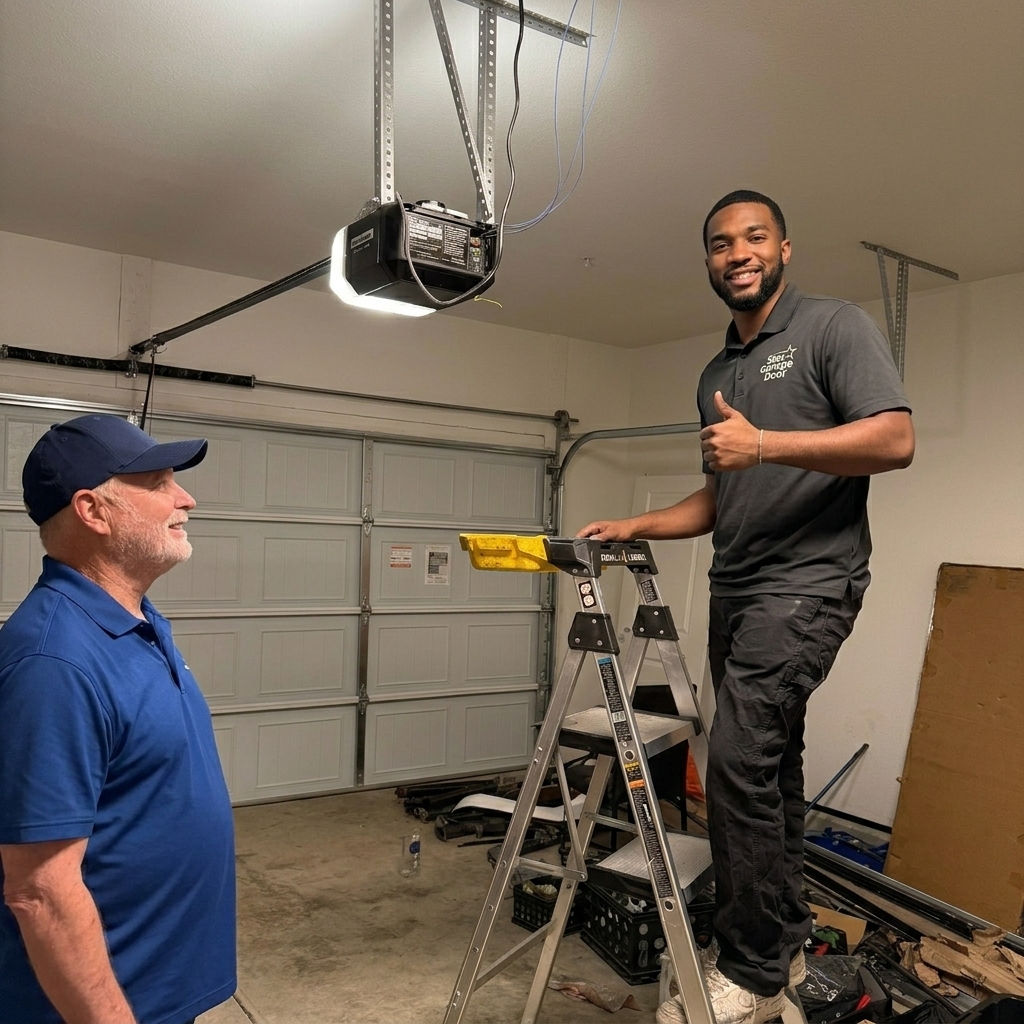
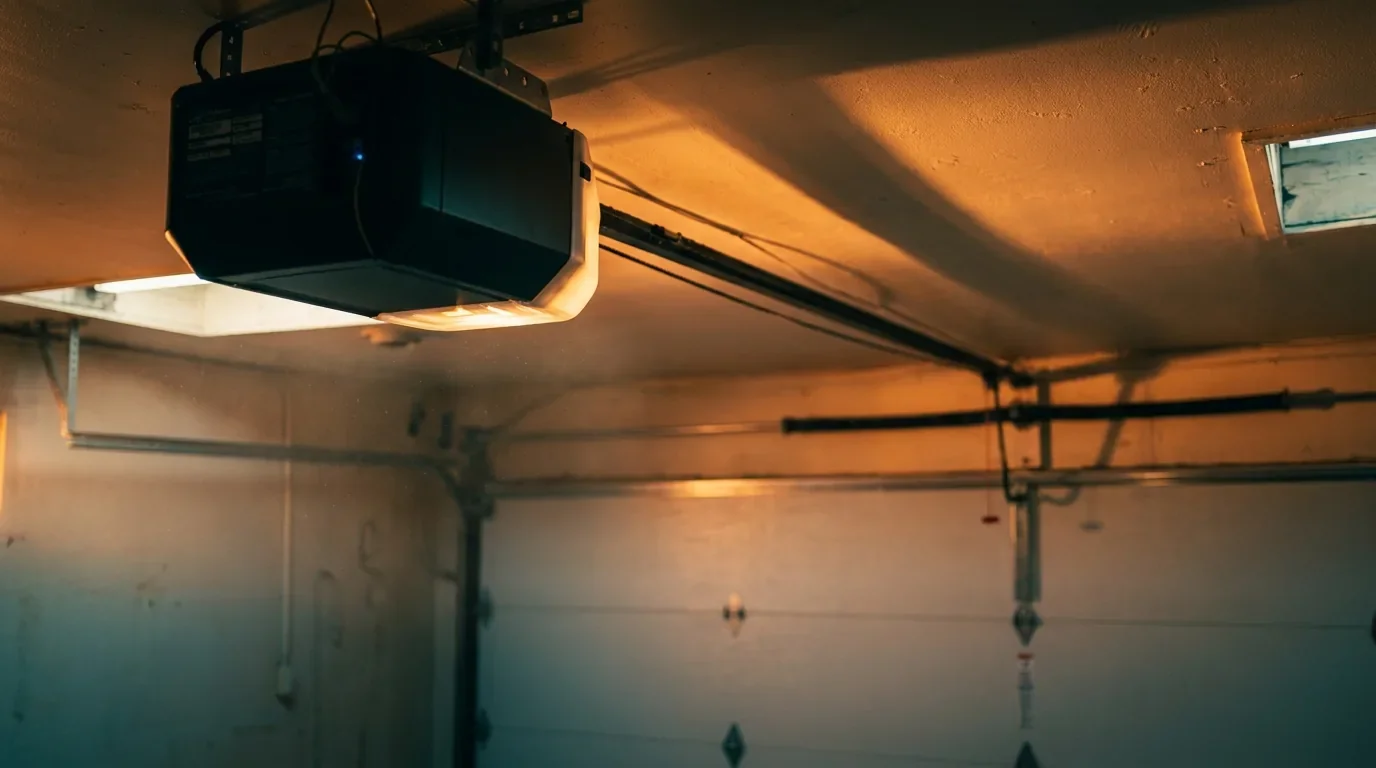
A connected opener is an ordinary opener with a small wireless module and a position sensor. The module joins your home network and talks to the manufacturer's servers. The sensor tells it whether the door is open or closed.
That is the whole of it. The motor, the gear, the rail, the springs, the cables, the rollers and the tracks are exactly what they were. Nothing about the mechanical door has changed, and this is the single most important thing to understand about the purchase.
There are two ways to get it: a new opener with it built in, or a retrofit controller wired across the terminals your wall button uses, with a separate tilt or magnetic sensor on the door. The retrofit route works on most openers made in the last twenty-five years and is considerably cheaper than a new machine.
The three things it does well
- Status. Knowing whether the door is open, from anywhere. This is the feature people actually use and it justifies the purchase on its own for a lot of households.
- Close from away. Related but separate, and it is why the door beeps and flashes before an app-initiated close. That warning is a safety requirement, not a nuisance, and any product that skips it is one to walk away from.
- Access without a code. Letting a delivery, a contractor or a family member in for a defined window, with a log of who and when. This is the feature people under-use and it is the strongest one after status.
The two consequences nobody mentions
It depends on somebody else's servers. Your phone does not talk to your garage. It talks to a company's cloud, which talks to your opener. When that service has an outage, or the company changes its app, or it decides an integration with another platform is ending, your feature changes without you doing anything.
This has happened, more than once, across several manufacturers. It is not a reason to avoid connected openers. It is a reason to buy one where the remote, the wall button and the keypad all still work perfectly with no network at all, which on a reputable unit they do.
It is now on your network. A device that can open your house is joined to your wifi and reachable from the internet by design. The sensible precautions are ordinary ones: a unique password, two-factor on the account if it is offered, and firmware updates left switched on. Nobody thinks of a garage opener as a computer. It is a computer.
What it does not do, despite the marketing
It does not make the door safer in the sense that matters. Photo eyes and force reversal are what stop a door closing on something, and those have been required on openers since the early nineties. A connected opener has exactly the same ones. If your current opener has no photo eyes at the bottom of the tracks, that is the upgrade to make, and connectivity is beside the point.
It does not know that a spring is tired, a cable is fraying or a roller has seized. It knows open or closed. Some units report a force trend and a cycle count, and if yours does that is genuinely useful data, but it is not a diagnosis.
It does not make a heavy door lighter, and it does not make a noisy door quieter.
The one feature worth more than the app
If you are replacing an opener anyway, the feature to pay attention to is the battery backup, and it has nothing to do with connectivity.
An opener with no backup is a door you cannot open electrically in a power cut, and the manual release is not obvious to somebody who has never used it. In a household where the garage is the main way in and out, that matters far more often than remote status does.
The money question
No prices, but the shape is clear. A retrofit controller is a fraction of the cost of a new opener and gives you the same headline feature. A new opener with it built in costs what a new opener costs, plus a small premium.
So the honest question is whether you want connectivity or a new opener. They are separate purchases that the market has bundled. If the existing machine is healthy, has photo eyes, and is under about fifteen years old, the retrofit is very often the better buy.
What not to buy
- Do not buy a new opener purely for connectivity. If yours is sound, the retrofit does the same job for much less.
- Do not buy a controller that closes without a warning cycle. The lights and the beeper before a remote close are the whole safety case for the feature.
- Do not buy connectivity for a pre-sensor opener. Money spent adding an app to a machine with no photo eyes is money spent on the wrong end of the problem.
- Do not buy on the strength of an integration you need. Those come and go at the platform owner's discretion. Buy for what the unit does on its own.
The short version
A smart opener answers one nagging question very well and adds a dependency on somebody else's servers. It changes nothing about the machinery that actually fails.
Which does mean the version we most often recommend is the inexpensive retrofit box on a perfectly good existing opener. It is not much of a sale, but it is usually the right answer.
Star Garage Door Repair · (833) 368-3891 · garagerepairstar.com
Lic. 1142048 · Serving Sacramento and the surrounding area.